Orthopaedic practices are facing a workforce problem. Fewer experienced staff are available to support the operating room. Many groups are losing veteran nurses and surgical techs to burnout, retirement, or better-paying roles in other specialties. Replacing them has become slow and expensive.
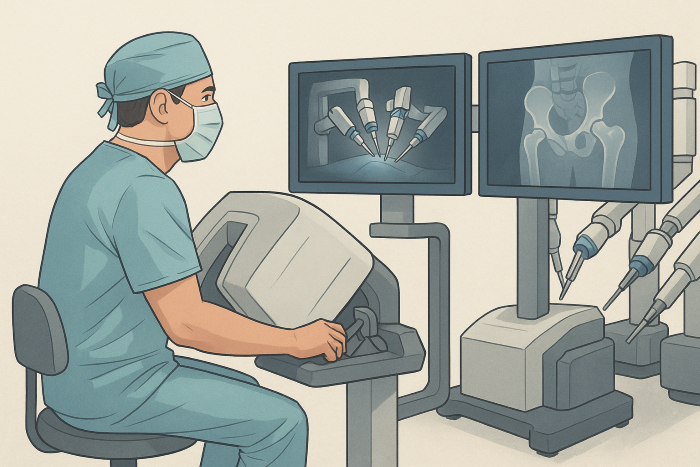
Robotics as a workforce stabilizer
As clinical demand keeps rising, practices are looking for ways to stabilize the OR. For a growing number of surgeons and administrators, robotics is becoming a practical response.
These systems are showing up in places that once relied entirely on human expertise. Some are installed in community hospitals. Others are being adopted in private practices with limited clinical staffing. The technology helps keep procedures on track, even when teams are incomplete or in transition.
Robotic platforms don’t solve every staffing issue, but they can reduce pressure. The planning software offers guidance before the first incision. During surgery, robotic systems can assist with implant positioning and provides immediate feedback.
Reducing dependency on specialized staff
In some practices, robotics is helping reduce reliance on highly specialized personnel. Less experienced staff can onboard faster when procedures follow a more predictable path. This helps groups maintain surgical volume without depending on a handful of senior team members to hold everything together.
Adding robotics can also reduce bottlenecks that arise when clinical support staff are stretched too thin. Tasks that require precision and repetition, such as consistent component alignment, can be standardized through robotic assistance. That allows human team members to focus on higher-level clinical needs or patient communication without compromising surgical outcomes.
For administrators, robotics is also becoming part of a broader risk-reduction strategy. In environments where turnover is frequent and cross-training takes time, robots bring a level of continuity that supports both patient safety and operational flow.
A long-term play in a strained system
There’s a financial cost, but for many, the tradeoff is worth it. Delays in the OR, extended recruitment cycles, and high turnover each carry financial consequences. Robotics offers a level of consistency that can help offset those disruptions.
Patients also play a role. Some are asking about robotic-assisted procedures and view the technology as a marker of quality. For groups trying to compete for both patients and staff, the systems provide a way to show you’re investing in long-term stability.
Surgeons still guide the case. Robotics doesn’t replace experience, but it does protect it. In a staffing environment where consistency is hard to come by, that support can make the difference between getting through the schedule or falling behind.
The employment gap isn’t going away soon. The shortage of orthopaedic specialists is expected to grow significantly through 2036, especially in rural areas. That’s why more practices are filling it with tools that don’t need to be recruited, trained, or retained.
Sources
Analyzing Orthopaedic Workforce Trends in the United States
How Robots Are Addressing the Healthcare Workforce Shortage
Humanoid robots could help solve surgery delays and hospital staff shortages
Solving staff shortages in ORs with autonomous surgical robots?
The Surgeon Shortage: A Deeper Look at Workforce Misalignment
Why staffing shortages are especially pressing for orthopedic surgeons