Joint pain apps have exploded in popularity, with many patients downloading them before they ever see a specialist. Pain logs, rehab guidance, AI-based gait analysis, and symptom trackers are all a tap away. But most apps marketed for joint pain offer little clinical value when you take a closer look. Here’s a breakdown of the ones patients are using, what they promise, and what the evidence actually says.
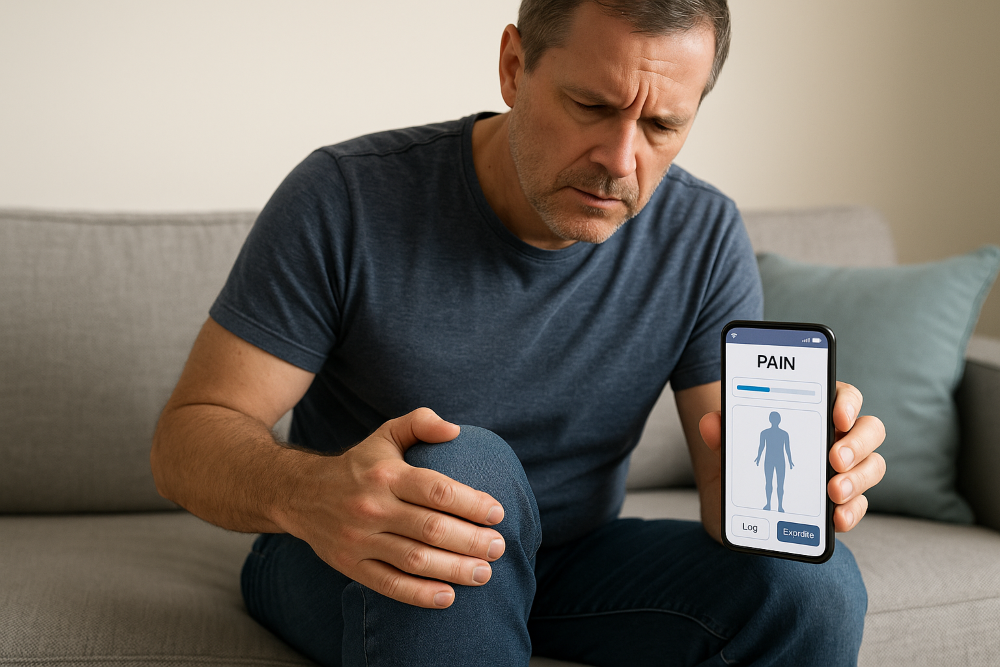
1. Pain-tracking apps: High engagement, low clinical impact
Apps like PainScale, Manage My Pain, My Pain Diary, and Pathways let patients log daily symptoms, mood, triggers, and medication use. They often feature emojis, sliders, or customizable body maps.
What’s missing? Standardized assessment tools. Fewer than 20 percent of these apps use validated scales like PROMIS or WOMAC, or even a consistent numeric rating scale aligned with VAS benchmarks. The visual reports patients generate? Not great for tracking changes over time. They rarely help when it comes to adjusting treatment meaningfully.
Takeaway: These apps may help patients reflect on symptom trends, but they don’t translate into actionable insights during clinical visits.
2. Physical therapy apps: Generic videos masquerading as rehab
Apps like Kaia Health, Hinge Health, Sworkit, PT Timer, and PeerWell claim to deliver physical therapy without needing in-person appointments. Most rely on pre-recorded videos, while some attempt motion tracking using phone cameras or internal sensors.
A 2022 review found only 3 of 42 musculoskeletal rehab apps had any evidence of effectiveness that met reasonable methodological standards. Most use generic progressions with no input from clinicians or feedback from patients. Real-time monitoring is nearly absent. Customization based on procedure type, surgical timeline, or comorbid limitations is largely missing.
Takeaway: These apps function more like fitness content libraries than therapeutic interventions. They may be useful for supplemental movement, but they shouldn’t be a primary rehab strategy.
3. Gait and mobility apps: More hype than accuracy
Several apps now advertise gait and mobility analysis using smartphone sensors. Promises include real-time feedback on stride symmetry, cadence, speed, and even joint angles.
In a 2024 review of mobility-focused apps, researchers found that most failed to replicate the reliability or consistency of lab-based assessments. Many relied on accelerometers with minimal calibration or vague benchmarks. Some offered non-specific summaries such as “mobility may be reduced” without context or next steps.
Takeaway: These tools may increase patient awareness or activity tracking but remain too inconsistent to guide clinical decision-making.
4. Mind-body pain apps: Helpful for some, limited for most
Apps like Curable, Pain Coach, Pathways, Flowly, and Mindfulness Coach focus on cognitive behavioral therapy, mindfulness training, and pain neuroscience education. These tools are frequently downloaded by patients with fibromyalgia, persistent joint pain, or pain sensitization syndromes.
One randomized study showed modest improvements in perceived pain and anxiety after 8 weeks of use. However, results really depended on the user’s mental health going in, and the improvements often didn’t translate to objective functional gains. Apps with guided sessions tended to outperform passive content.
Takeaway: These apps can complement care for patients dealing with chronic pain and psychological distress. Success depends heavily on motivation and consistent use.
5. Post-op recovery tools: Often poorly timed and oversimplified
Several consumer-facing apps claim to support post-op recovery after procedures like total knee arthroplasty, ACL reconstruction, or rotator cuff repair. Tools like PeerWell and MyMobility attempt to deliver guided protocols for the recovery phase.
In practice, many fail to adjust for surgical technique, complications, or progress plateaus. Most follow rigid timelines with no way to adjust based on how someone’s actually doing. When used as stand-alone recovery plans, these apps may lead to missed milestones or even delay functional return.
Takeaway: Unless paired with direct clinical oversight, post-op recovery apps remain too generic for complex rehab needs. They may fill gaps, but they shouldn’t direct care.
6. “Digital therapeutics” with big claims and thin evidence
A growing number of companies label their products as “digital therapeutics.” This term implies regulatory oversight and clinically validated benefits. Despite bold claims, most of these platforms, including Kaia Health, Hinge Health, Limber Health, and Sword Health, lack independent trials or reproducible results. Long-term outcomes? Still a big question mark.
Some have published preliminary outcomes from internal studies or partnerships, but these are often uncontrolled or underpowered. Replication by third-party investigators is rare. Long-term functional outcomes are still unclear.
Takeaway: Scrutinize any product calling itself a therapeutic. Until more robust evidence is available, treat them as adjuncts rather than stand-alone interventions.
7. Apps that do one thing well: The rare bright spots
A handful of apps succeed by focusing on a single function and doing it well. For example, some tools, such as Bearable and Symple, allow export of symptom data into formats compatible with clinical records. Others, like Google Fit and Apple Health, integrate with wearable sensors like Fitbits or Apple Watches. A few even support remote check-ins between patient and provider.
While these apps don’t replace therapy, they can increase accountability or supplement rehab. They’re not perfect, though. Most still lack intelligent progression, validated assessments, or integration with health records.
Takeaway: Use these apps tactically – for activity reminders, data tracking, or keeping patients engaged – but not as replacements for in-clinic or provider-guided care.
Final word: Recommend with precision, avoid blind endorsement
Patients are more tech-savvy than ever, and joint pain apps clearly meet a growing demand. But most tools still fall short of delivering meaningful clinical value. Pain logs are often inconsistent, rehab plans tend to be rigid, and motion trackers rarely live up to their claims.
That said, this isn’t a call to abandon apps entirely. Some may offer real benefits if used intentionally, especially for tracking progress, encouraging movement, or supporting mental health. The key is knowing how to use them and when they actually help. With informed guidance and realistic expectations, certain tools can complement care rather than complicate it.
Sources
Development of the intelligent knee osteoarthritis lifestyle app: a person-based approach
Low back pain self-management mobile applications: a systematic review on digital platforms