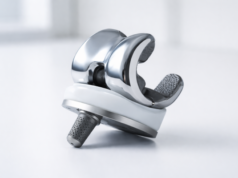
Orthopaedics is a visual specialty. You reduce fractures, reconstruct joints, restore alignment, and return athletes to competition. These moments translate easily to social media, and you may use them to demonstrate technique or share educational insight.
At the same time, when posting online, you may be promoting a device you use, reinforcing a financial relationship, or shaping patient expectations about results. In orthopaedics, where implant selection and industry ties are central to practice, your online content carries clinical and financial implications.
Engaging online requires protecting your patients and your professional standing.

Implant visibility and financial disclosure
You maintain relationships with industry in various forms. Financial arrangements between orthopaedic surgeons and device manufacturers are common and often support product development and surgical innovation.
For that reason, if your social media features a specific product or biologic, your post may function as an endorsement, even if unintentionally. The Federal Trade Commission requires clear disclosure of material financial relationships in digital endorsements.
The AAOS Code of Medical Ethics also requires disclosure of financial relationships that may influence clinical decision-making.
Presenting a device without disclosure invites scrutiny. Transparent communication allows others to evaluate your recommendations with appropriate context.
Surgical footage and patient dignity
You operate in a specialty that produces powerful visual content. Trauma surgery and complex reconstruction generate images that draw attention online.
However, HIPAA protects identifiable patient information, including photographs and data that could reasonably identify a patient.
Even when names are removed, contextual details can reveal identity, particularly in close communities or highly publicized cases. A single distinctive feature may be enough to narrow anonymity.
Accordingly, before posting, you must evaluate whether the patient’s dignity remains protected. Regulatory compliance does not fully resolve the ethical responsibility you carry.
Outcome representation and expectation setting
You practice in a field where outcomes are measurable and highly visible. Performance metrics and rapid recovery narratives are easy to showcase online.
Research has demonstrated that patients whose expectations are met at 6 and 12 months following total hip or knee replacement report significantly higher satisfaction with their surgery than patients whose expectations are not met, and satisfaction increases as more expectations are fulfilled.
When you highlight exceptional recoveries without broader clinical context, you influence expectations before a patient enters your clinic. Recovery trajectories differ across individuals and carry inherent risk. Accurate representation supports informed decision-making.
Direct messaging and clinical boundaries
You may receive direct messages asking about candidacy for joint replacement or sports procedures. The American Medical Association advises physicians to maintain professional boundaries online and avoid individualized medical advice on public platforms.
In practice, clinical guidance requires documentation and appropriate privacy safeguards. Redirecting online inquiries into formal evaluation protects your medical judgment and your records.
Ethical discipline in a high-visibility specialty
Orthopaedics combines visible procedures with close industry integration. Social media increases the reach of both.
As a result, your digital activity becomes part of your professional record and may intersect with litigation exposure or device scrutiny. Applying the same discipline to online engagement that you apply to operative decision-making ensures alignment with the ethical standards of orthopaedic practice.
Sources
Code of Ethics and Professionalism for Orthopaedic Surgeons
Disclosures 101 for Social Media Influencers
Patient expectations and satisfaction 6 and 12 months following total hip and knee replacement
Physicians’ Use of Social Media for Product Promotion and Compensation